
Esophoria is a type of binocular vision dysfunction (BVD) where the eyes have a tendency to drift inward, toward the nose. Most of the time, the brain keeps them aligned, so vision stays clear and single. However, the work of alignment can significantly be impacted by fatigue or visual stress, like long hours of reading or screen use, which is when symptoms surface.
Eye alignment is an essential part of clear vision. When it is impaired, individuals may experience headaches, dizziness, vertigo, or double vision. Studies suggest that binocular vision problems affect at least 20% of the population, yet many cases go undiagnosed because standard eye exams do not evaluate how the eyes work together.
A NeuroVisual Specialist uses advanced diagnostic testing to identify esophoria and determine whether it may be contributing to a patient’s symptoms. From there, they create a tailored treatment plan to help improve eye alignment and reduce visual strain.
In this guide, you will learn what esophoria is, its causes and symptoms, how it compares to related eye conditions, treatment options, and how to find a NeuroVisual Specialist near you.
What Is Esophoria?
Esophoria is a type of BVD that causes a subtle misalignment of the eyes, where one eye tends to drift inward while the other remains focused. This misalignment is often intermittent and may become more noticeable when the visual system is under stress.
Esophoria can contribute to symptoms such as dizziness, headaches, and double vision, along with other effects like:
- Over-convergence: When the eyes turn inward too much, it can make it difficult to shift focus between near and distant objects.
- Vestibular and coordination issues: When the brain struggles to fuse images into a single, clear view, it can affect balance and spatial awareness.
- Attention-related symptoms: Difficulty concentrating, losing your train of thought, and “brain fog” can resemble ADHD or a learning disorder. Misdiagnosed ADHD might be a vision problem.
Symptoms of Esophoria
Esophoria is characterized by a tendency for the eyes to drift inward due to a subtle misalignment in eye muscle coordination. This can place strain on the visual system, especially during tasks that require sustained focus. Common symptoms of esophoria include:
- Dizziness
- Vertigo
- Headaches
- Lack of spatial orientation or clumsiness
- Pain or fatigue around the eye
- Motion sickness
- Difficulty concentrating
- Issues with reading or maintaining focus
What Causes Esophoria?
Esophoria does not always have a single identifiable cause. Instead, it often develops due to a combination of neurological and muscular factors that affect how the eyes align and work together. In many cases, these underlying issues can remain undetected until the visual system is placed under strain.
Neurological and muscular causes may include:
- Eye muscle coordination issues: Small imbalances in how the eye muscles work together can affect alignment and make it harder for the eyes to maintain a single, clear image.
- Neurological processing differences: The brain plays a key role in merging images from both eyes. When this process is inefficient, it can contribute to misalignment associated with esophoria.
- Binocular vision dysfunction (BVD): Esophoria is considered a form of BVD, where the eyes struggle to function as a coordinated team.
Certain triggers can make esophoria symptoms more noticeable, including:
- Fatigue or lack of sleep
- Prolonged screen use or reading
- Physical or emotional stress
- Illness or changes in overall health
- Traumatic brain injury or concussion
Because these factors can vary from person to person, esophoria may develop gradually or become more noticeable over time.
How a Neuro Optometrist Diagnoses Esophoria
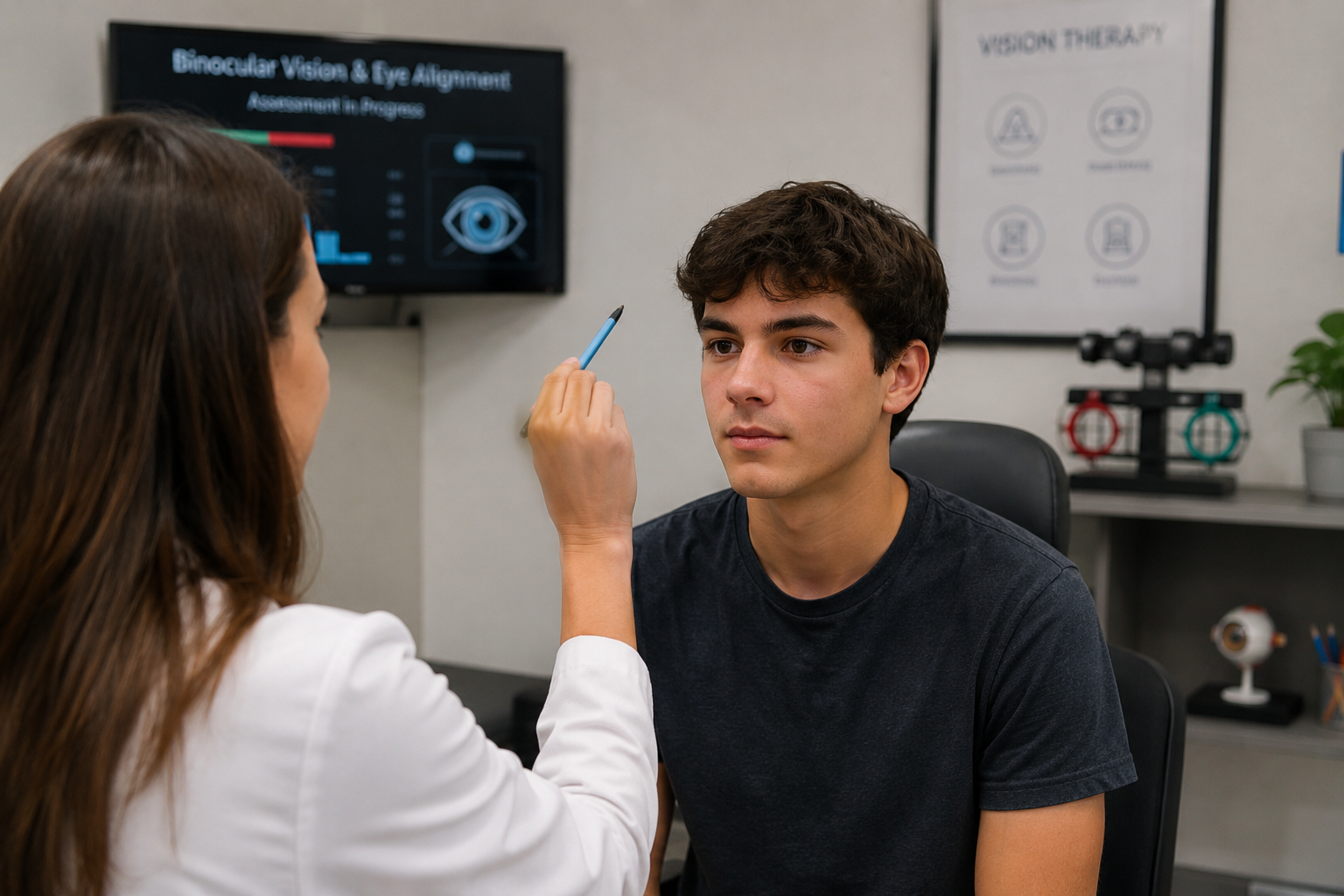
Esophoria is often diagnosed by a neuro-optometrist, an eye doctor with advanced training in how the eyes and brain work together. During a comprehensive exam, the individual may be asked to cover one eye with a paddle or their hand while reading letters both up close and at a distance. This helps assess eye alignment, coordination, and signs of esophoria.
Unlike standard eye exams, which focus mainly on visual clarity, this evaluation uses specialized testing to look at how the eyes function as a team. Because of this, esophoria and other forms of BVD are often missed.
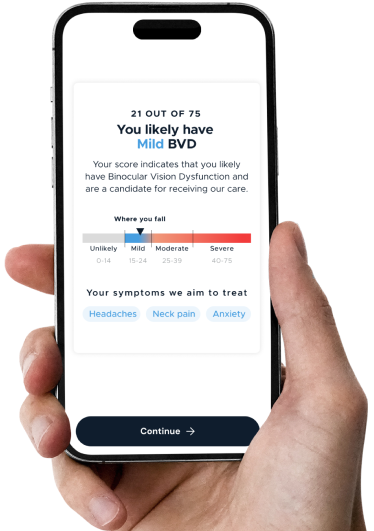
In some cases, patients may also complete a symptom questionnaire like the BVDQ to help identify patterns associated with BVD and related disorders such as esophoria.
| Test or Method | What It Evaluates |
| Cover test | Vertical/horizontal eye alignment/ inward drift |
| Near and distance reading | How the eyes focus and coordinate |
| Binocular vision assessment | How both eyes work together |
| Symptom questionnaire (BVDQ) | Patterns linked to BVD symptoms |
Esophoria vs. Other Eye Conditions
Esophoria is often confused with other eye alignment conditions that may appear similar but have different underlying causes and characteristics. Understanding how esophoria compares to related conditions can help clarify symptoms and guide appropriate evaluation and treatment.
Esophoria vs. Esotropia
Esophoria and esotropia are closely related and involve a misalignment of the eyes. However, esophoria is an occasional, subtle shift within one eye, while esotropia happens more frequently and consistently, causing diplopia or double vision. Because esotropia is more constant and because there is frequent double vision, it is often easier to diagnose during a routine eye exam, whereas esophoria may require specialized testing to detect.
Esophoria vs. Exophoria
While esophoria causes an inward misalignment of the eye, exophoria is an outward deviation of the eye. It only occurs sometimes and exophoric eyes can still function well together to process images.
However, one eye may shift outward if binocular vision is disrupted. This can happen when an individual is trying to focus on a single object, but is unable due to muscular weakness. Both conditions fall under binocular vision dysfunction, but they differ in the direction of eye drift.
Exotropia vs. Esophoria
Exotropia vs. esophoria refers to two different types of vision misalignment that affect how the eyes work together. While esophoria causes the eyes to drift inward, exotropia causes one eye to turn outward and is typically more noticeable and constant.
Esophoria is often intermittent and may only appear under visual stress, whereas exotropia can be present more consistently, cause double vision and may be easier to detect during a standard eye exam. These differences in frequency and direction of eye movement can influence both symptom severity and the type of treatment recommended.
Treatment Options for Esophoria
Treatment for esophoria focuses on improving eye alignment and reducing the strain placed on the visual system. The right approach depends on the severity of the condition and how symptoms present in daily life.
Common treatment options include:
- Prism glasses: These specialized lenses help shift incoming images so the brain can more easily merge them into a single, clear picture. Prism glasses can reduce the effort required to maintain alignment. The NeuroVisual Medicine approach uses therapeutic microprism lenses tailored to the individual’s specific misalignment. Vision therapy: In some cases, guided exercises may be used to improve coordination between the eyes and strengthen visual function.
Recovery timelines can vary, but many individuals begin to notice symptom improvement within days to weeks of starting treatment with therapeutic microprism lenses, and within months with vision therapy.
How Esophoria Relates to Binocular Vision Dysfunction (BVD)
Esophoria is considered a form of binocular vision dysfunction (BVD), a condition in which the eyes struggle to work together as a coordinated team. Even small misalignments can place stress on the brain as it attempts to combine two images into one.
Because this process is continuous, the strain caused by esophoria can lead to symptoms that extend beyond vision, including headaches, dizziness, and difficulty concentrating. Understanding how esophoria fits within BVD can help guide more accurate diagnosis and targeted treatment.
When to See a NeuroVisual Specialist
Esophoria symptoms are not always immediately recognized as vision-related, which can delay proper diagnosis and treatment.
You may benefit from seeing a NeuroVisual Specialist if you experience:
- Frequent headaches or migraines
- Dizziness or balance issues
- Eye strain during reading or screen use
- Difficulty concentrating
- Double vision or blurred vision
- Discomfort in busy or visually stimulating environments
If these symptoms are ongoing or unexplained, a specialized evaluation can help determine whether esophoria may be contributing to your condition. Taking a short BVD assessment is often the first step in identifying whether esophoria may be contributing to your symptoms.
Find a NeuroVisual Specialist Near You
If your symptoms may be related to esophoria or binocular vision dysfunction, finding a trained provider can help identify the underlying cause and guide treatment.
NeuroVisual Specialists use advanced testing to evaluate how the eyes and brain work together, allowing them to detect subtle misalignments that may not appear in a routine eye exam.
Taking the first step can help you better understand your symptoms and explore treatment options tailored to your needs.
Frequently Asked Questions About Esophoria
What is esophoria?
Esophoria is a condition where the eyes have a tendency to drift inward, especially when under visual stress or when one eye is covered. This occurs due to a subtle misalignment in how the eyes coordinate and work together. Because the misalignment is often intermittent, it may not always be noticeable without specialized testing.
What causes esophoria?
Esophoria is typically caused by a combination of neurological and muscular factors that affect eye alignment. This includes how the eye muscles coordinate and how the brain processes visual input. Triggers such as fatigue, stress, or prolonged screen use can make symptoms more noticeable.
What are the most common symptoms of esophoria?
The most common symptoms of esophoria include headaches, dizziness, double vision, and difficulty concentrating. These symptoms occur because the brain is working harder to merge two slightly misaligned images. Over time, this added strain can affect both visual comfort and daily functioning.
What is the difference between esophoria and esotropia?
The difference between esophoria and esotropia is that esophoria is typically intermittent, while esotropia is a constant inward turning of the eye. Esophoria may only appear under certain conditions, such as fatigue or visual stress. Esotropia is usually more noticeable and easier to detect during a standard eye exam.
Can esophoria go undiagnosed?
Yes. Esophoria can go undiagnosed because standard eye exams often focus on visual acuity rather than eye coordination. Subtle misalignments may not be detected without specialized testing. As a result, individuals may experience symptoms for years without identifying the underlying cause.
How is esophoria treated?
Esophoria is commonly treated using prism glasses, vision therapy, or specialized approaches such as those used in NeuroVisual Medicine. Prism lenses help align visual input so the brain can process a single image more easily. Treatment plans are typically customized based on the individual’s specific misalignment and symptoms.
Can esophoria cause dizziness or vertigo?
Yes. Esophoria can cause dizziness or vertigo because the brain relies on visual input to maintain balance and spatial awareness. When the eyes are misaligned, it can disrupt how visual information is processed. This mismatch can contribute to feelings of motion sensitivity or disorientation.
When should you see a NeuroVisual Specialist for esophoria?
You should consider seeing a NeuroVisual Specialist for esophoria if you experience persistent symptoms such as headaches, dizziness, eye strain, or difficulty concentrating. These symptoms may indicate a problem with eye alignment rather than visual clarity. A specialized evaluation can help determine whether esophoria is contributing to your condition and guide appropriate treatment.