
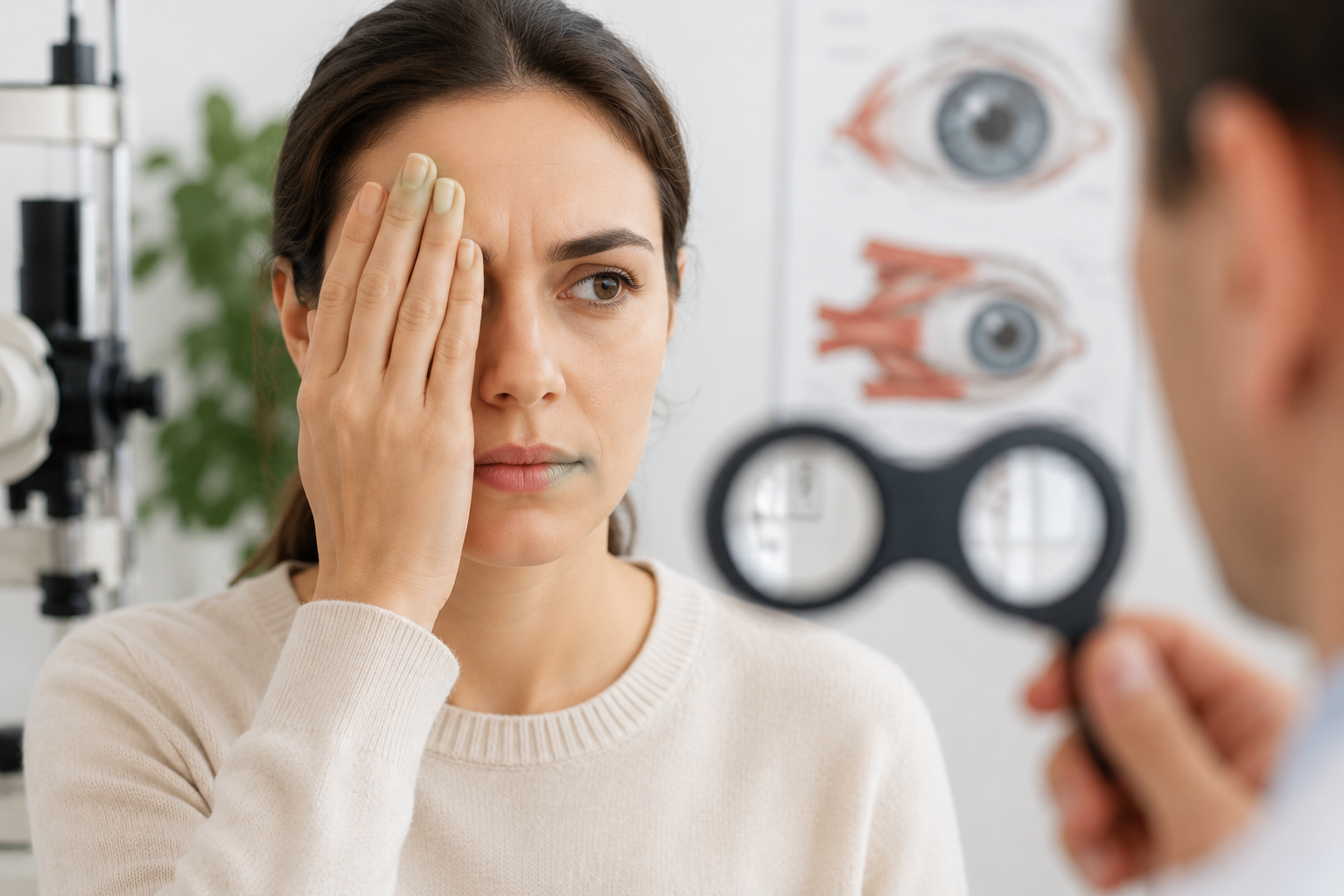

Esotropia and exotropia are two common forms of strabismus, a condition that causes the eyes to become misaligned. Esotropia occurs when one or both eyes turn inward toward the nose, while exotropia occurs when one or both eyes turn outward away from the nose.
Although both eye conditions affect alignment, they can present differently and may impact visual comfort, depth perception, reading ability, and daily activities. Understanding the difference between esotropia vs. exotropia is important because symptoms can overlap with other eye disorders, including exophoria and binocular vision dysfunction (BVD).
At Vision Specialists, we evaluate how the eyes work together and determine whether symptoms are related to strabismus, binocular vision problems, or another underlying visual condition.
Esotropia vs. Exotropia at a Glance
While both esotropia and exotropia are forms of strabismus that affect eye alignment, the direction of the eye turn and how symptoms present can differ. The comparison below highlights the key similarities and differences between these two conditions.
| Question | Esotropia | Exotropia |
| Which direction does the eye turn? | Inward toward the nose | Outward away from the nose |
| Common appearance | Crossed eyes | Outward drifting eye |
| Can it be intermittent? | Yes | Yes |
| Can it be constant? | Yes | Yes |
| Can it affect depth perception? | Yes | Yes |
| Can adults develop it? | Yes | Yes |
| Can it cause double vision? | Yes | Yes |
| Is it a form of strabismus? | Yes | Yes |
What Is the Difference Between Esotropia and Exotropia?
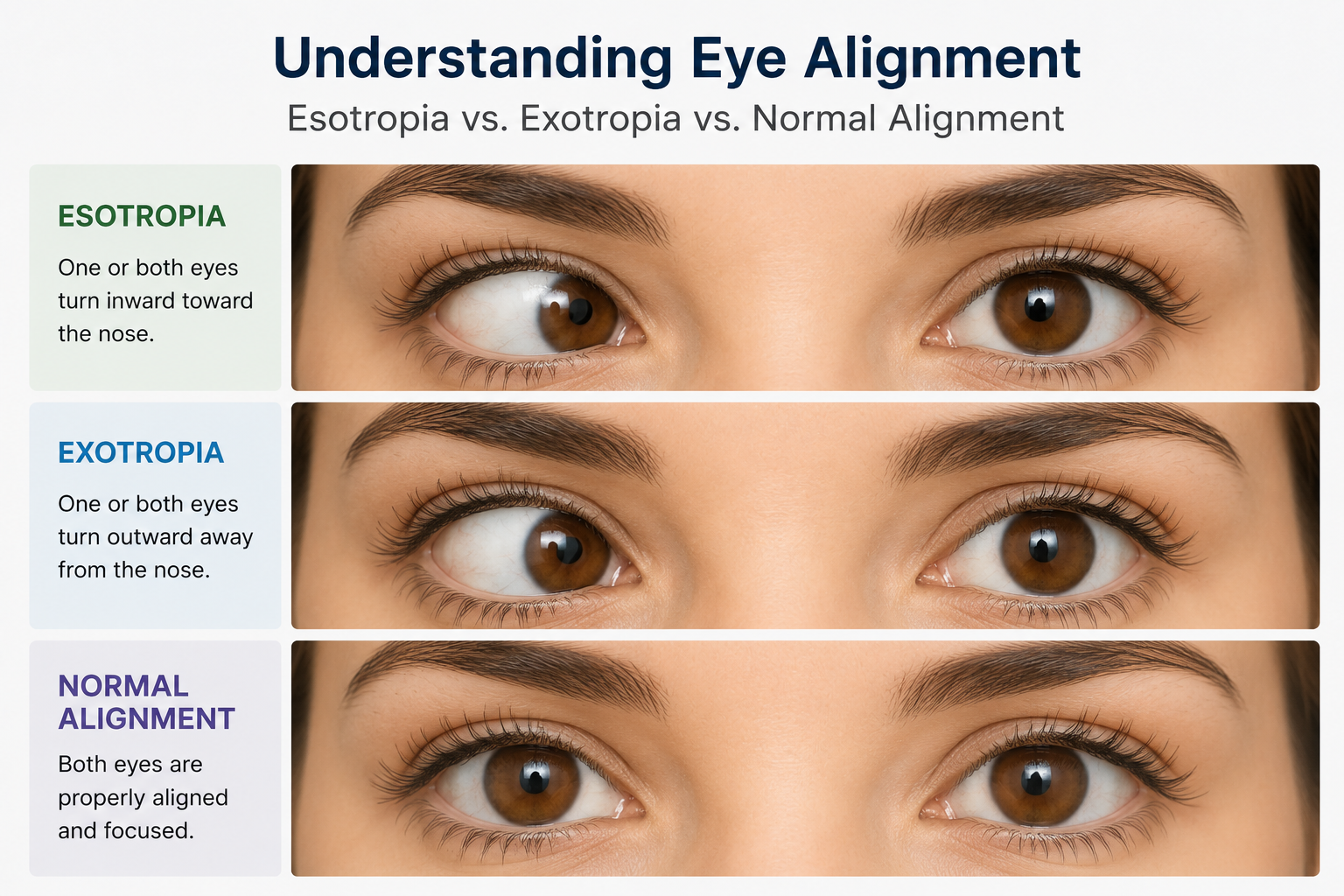
The primary difference between esotropia and exotropia is the direction of eye misalignment.
With esotropia, one eye turns inward toward the nose. With exotropia, one eye turns outward away from the nose. Both conditions may occur in one eye or alternate between eyes.
Some people experience constant eye misalignment, while others notice symptoms only occasionally. Intermittent eye turns may become more noticeable when a person is tired, stressed, focusing for long periods, sick, or visually overwhelmed.
Because both conditions can affect binocular vision, they may lead to similar symptoms despite the difference in eye position.
Wondering if you have Binocular Vision Dysfunction? Take the BVD assessment to get your score and take control of your diagnosis.
What Is Esotropia?
Esotropia is a type of strabismus characterized by an inward turning of one or both eyes. The eye turn may be present all the time or only during certain visual tasks.
In some individuals, the brain adapts by suppressing visual input from one eye to avoid double vision. Others may experience persistent symptoms because the eyes are sending conflicting visual information to the brain.
Common symptoms of esotropia include:
- One eye turning inward
- Double vision
- Headaches
- Eye strain
- Visual fatigue
- Difficulty reading
- Reduced depth perception
- Trouble focusing
- Squinting or closing one eye
What Is Exotropia?
Exotropia is a type of strabismus where one or both eyes turn outward. The eye turn may be constant or intermittent.
Intermittent exotropia is often more noticeable when a person is tired, daydreaming, looking into the distance, or concentrating for extended periods.
Common symptoms of exotropia include:
- One eye drifting outward
- Eye strain
- Double vision
- Blurred vision
- Difficulty concentrating
- Visual fatigue
- Poor depth perception
- Trouble maintaining focus
- Closing one eye in bright light
When Exophoria Becomes Exotropia
In some cases, exophoria can progress into exotropia. A person with exophoria uses visual effort to keep the eyes aligned. If that control weakens due to fatigue, illness, stress, visual demand, or other factors, the eyes may no longer remain coordinated.
When the outward drift becomes visible and the eyes are no longer consistently aligned, the condition is considered exotropia rather than exophoria.
This is one reason why patients with eye strain, headaches, reading difficulties, or intermittent outward eye drifting should receive a comprehensive binocular vision evaluation.
Symptoms of Esotropia and Exotropia
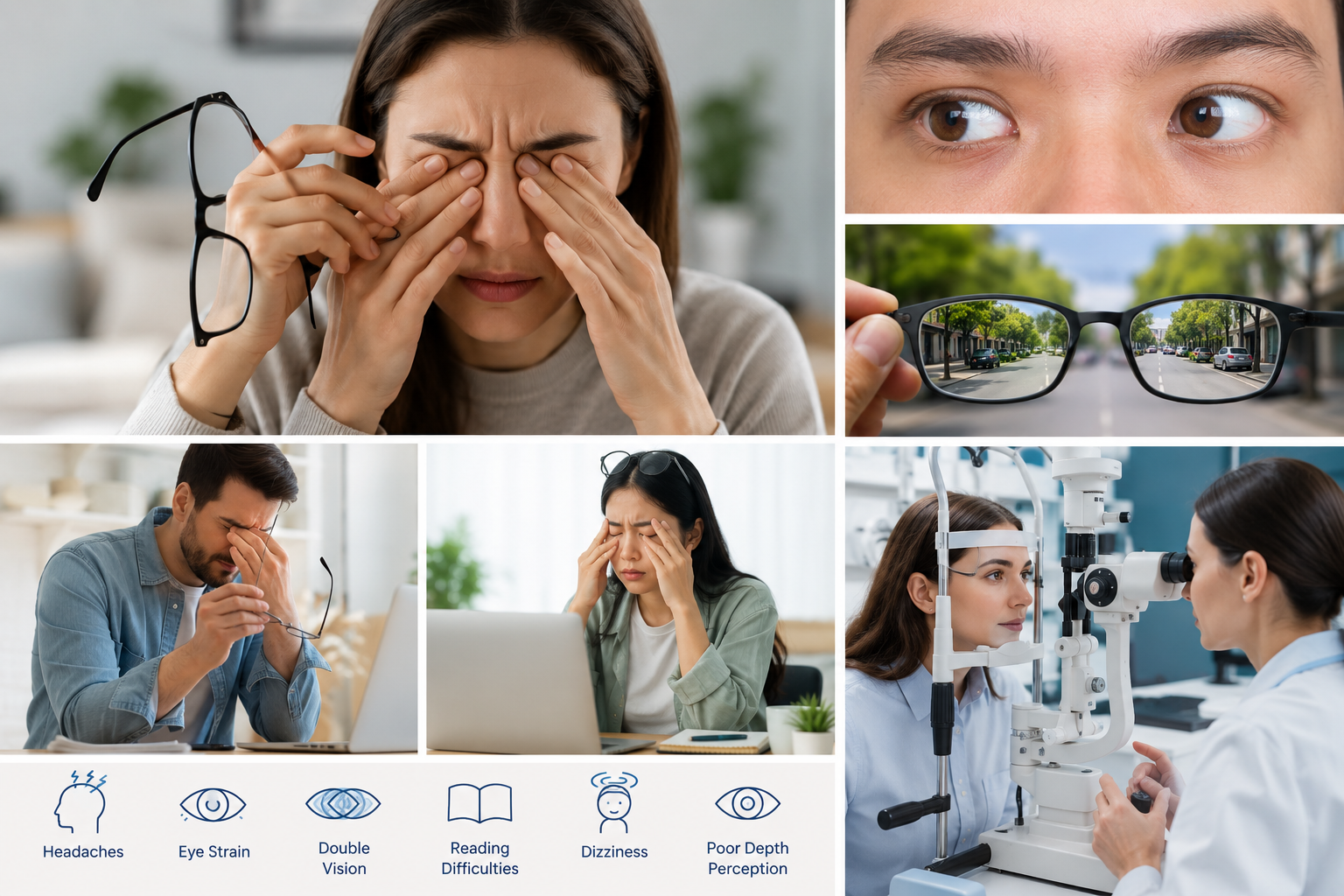
Although the direction of the eye turn differs, many symptoms overlap because both conditions interfere with how the eyes work together.
Common symptoms include:
- Double vision
- Eye strain
- Headaches
- Blurred vision
- Poor depth perception
- Visual fatigue
- Difficulty concentrating
- Trouble reading
- Dizziness or disorientation
- Closing one eye
- Difficulty judging distances
- Problems with balance, clumsiness, and coordination
Symptoms may become more noticeable during reading, computer use, driving, shopping, or other visually demanding activities.
How Eye Misalignment Can Affect Daily Life
Eye alignment plays an important role in how we interact with our environment. When the eyes are not working together properly, everyday tasks may become more difficult.
| Daily Activity | Possible Challenge |
| Reading | Losing place, skipping lines, visual fatigue |
| Computer work | Eye strain, headaches, focusing difficulty |
| Driving | Difficulty judging distance or lane position |
| Sports | Reduced hand-eye coordination |
| Walking stairs | Trouble with depth perception |
| School or work | Reduced concentration and visual comfort |
What Causes Esotropia and Exotropia?
Esotropia and exotropia can develop for a variety of reasons. The underlying cause is not always the same from person to person.
Possible contributing factors include:
- Eye muscle coordination problems
- Refractive errors
- Family history of strabismus
- Developmental vision disorders
- Neurological conditions
- Head injury or trauma
- Eye teaming difficulties
- Changes in visual function over time
Because several different factors may contribute to eye misalignment, a complete evaluation is necessary to determine the most appropriate treatment approach.
Could Symptoms Be Related to Binocular Vision Dysfunction?
Some symptoms commonly associated with esotropia and exotropia can also occur in patients with Binocular Vision Dysfunction (BVD).
Shared symptoms may include:
- Headaches
- Eye strain
- Double vision
- Difficulty reading
- Dizziness
- Visual fatigue
- Poor concentration
However, BVD does not always involve a visible eye turn. While esotropia and exotropia are forms of binocular vision dysfunction, many people with BVD have no obvious eye misalignment. Comprehensive testing helps determine the specific type of binocular vision dysfunction or whether another visual condition is causing the symptoms.
Find a BVD specialist near you.
How Are Esotropia and Exotropia Diagnosed?
Diagnosis begins with a comprehensive eye examination and binocular vision evaluation.
Testing may include:
- Review of symptoms
- Eye alignment testing
- Cover testing
- Visual acuity assessment
- Binocular vision testing
- Depth perception testing
- Eye movement evaluation
- Refractive error assessment
Accurate diagnosis is important because similar symptoms can result from different vision conditions.
Treatment Options for Esotropia and Exotropia
Treatment recommendations depend on the type of eye misalignment, severity of symptoms, and overall visual function.
Possible treatment options may include:
Prescription Glasses
Corrective lenses may help improve visual clarity and reduce strain associated with focusing problems.
Prism Lenses
Prism lenses may help improve visual comfort by realigning images and reducing the effort required for the eyes to work together.
Vision Therapy
Vision therapy may be used to improve eye coordination, focusing skills, and binocular vision function.
Monitoring
Some intermittent cases may be monitored to assess changes over time.
Surgical Referral
Certain patients may be referred for surgical evaluation when eye muscle alignment requires additional intervention.
Treatment should always be individualized based on a complete diagnosis.
When to See a Vision Specialist
You should consider scheduling an evaluation if you experience:
- A visible inward or outward eye turn
- Double vision
- Frequent headaches
- Eye strain
- Difficulty reading
- Poor depth perception
- Dizziness
- Visual fatigue
- Difficulty focusing
- Symptoms that worsen with screen use
Early diagnosis can help identify the cause of symptoms and guide appropriate treatment.
Understanding Esotropia vs. Exotropia
Esotropia and exotropia are both forms of strabismus but they differ in the direction of eye misalignment. Esotropia causes the eye to turn inward, while exotropia causes the eye to turn outward.
Exophoria is a related condition that involves a tendency for the eyes to drift outward while remaining largely controlled. Understanding the distinction between these conditions is important because symptoms can overlap and affect daily activities in different ways.
At Vision Specialists, we evaluate eye alignment, binocular vision, and visual comfort to determine the source of symptoms and recommend appropriate next steps for treatment.
Frequently Asked Questions About Esotropia vs. Exotropia
What is the difference between esotropia and exotropia?
Esotropia causes one or both eyes to turn inward toward the nose, while exotropia causes one or both eyes to turn outward away from the nose. Both are forms of strabismus that affect eye alignment and binocular vision.
Is esotropia the same as crossed eyes?
Yes. Esotropia is commonly referred to as crossed eyes because one or both eyes turn inward toward the nose.
Is exotropia the same as lazy eye?
No. Exotropia is an outward eye turn, while lazy eye (amblyopia) is reduced vision in one eye that frequently leads to an inward or outward eye turn. The two conditions are different, although they can sometimes occur together.
What is the difference between exophoria and exotropia?
Exophoria is a tendency for the eyes to drift outward that is usually controlled by the visual system. Exotropia occurs when the outward eye turn becomes visible because the eyes are no longer maintaining alignment.
Can esotropia and exotropia cause double vision?
Yes. Both conditions can cause double vision because the eyes are not aligned and may send different visual images to the brain.
Can adults develop esotropia or exotropia?
Yes. While these conditions are often diagnosed during childhood, adults can also develop esotropia or exotropia due to changes in:
- Eye coordination
- Neurological issues
- Injury
- Other vision-related factors
How are esotropia and exotropia treated?
Esotropia and exotropia are treated throughout a variety of methods, depending on the severity and causes. Treatment may include:
- Prescription glasses
- Prism lenses
- Vision therapy
- Monitoring
- Referral for surgical evaluation
When should I see a specialist for eye misalignment?
You should seek evaluation if you notice an inward or outward eye turn, double vision, headaches, eye strain, difficulty reading, dizziness, or poor depth perception.
