How Vision Impacts Reading, Learning & Attention

Vision plays a critical role in reading, learning, and attention. Conditions like convergence insufficiency or subtle eye misalignment can cause eyestrain, double vision, and poor focus—symptoms often mistaken for ADHD....

What Statistics Say About Gender & Sports Concussions

Research shows female athletes sustain more concussions than males in similar sports. NCAA data reveals higher concussion rates in women’s soccer and basketball. Possible reasons include anatomical and hormonal differences,...

The 411 on Vertical Heterophoria

Vertical Heterophoria is a subtle vertical eye misalignment that causes the eyes to work harder to stay aligned. This strain can lead to dizziness, headaches, neck pain, and difficulty reading....

Explaining the Link Between Agoraphobia & Visual Vertigo

Visual vertigo from subtle eye misalignment—such as Vertical Heterophoria—can cause dizziness in busy or open environments. This discomfort may lead to anxiety and avoidance of public spaces, contributing to agoraphobia....

MdDS & Vertical Heterophoria: The Hidden Connection

Mal de Débarquement Syndrome (MdDS) and Vertical Heterophoria (VH) often overlap. VH, a form of eye misalignment, may worsen MdDS symptoms like dizziness and nausea. For patients unresponsive to vestibular...

The Origin of NeuroVisual Medicine

NeuroVisual Medicine began in 1985 when Dr. Debby Feinberg used prism lenses to treat vertical eye misalignment. Her success in relieving unexplained dizziness and headaches led to further research and...

The path to pain relief starts here

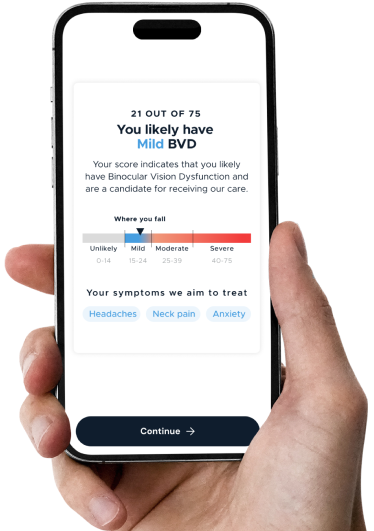
  1. Take the 7-minute BVDQ Assessment
  2. Understand your BVD symptoms
  3. Consult with a BVD Expert
Get started arrow right
BVD preview
Take the BVD assessment arrow right