
If your child squints frequently, struggles with reading, complains of headaches, or has difficulty seeing clearly at school, they may have astigmatism.
Astigmatism is one of the most common childhood vision conditions and can affect how clearly children see objects both near and far. In some cases, symptoms may be subtle and difficult for parents to recognize early.
Because children often assume their vision is “normal,” astigmatism may go undetected for years without a comprehensive eye evaluation. In some cases, symptoms such as headaches, dizziness, reading difficulty, or eye strain may also overlap with binocular vision dysfunction (BVD), a condition that affects how the eyes work together as a team.
In this guide, we’ll explain what astigmatism in kids is, common signs and symptoms, causes, and diagnosis.
What Is Astigmatism in Kids?
Astigmatism is a refractive vision condition caused by an irregular curvature of the cornea or lens of the eye.
Instead of being evenly rounded, the cornea may have a shape more similar to a football than a basketball. This changes how light enters the eye and prevents images from focusing clearly on the retina. As a result, children with astigmatism may experience:
- Blurry vision
- Distorted vision
- Difficulty focusing
- Eye strain
- Trouble seeing at near or far distances
Astigmatism may affect one eye or both eyes. According to Boston Children’s Hospital, up to 28% of children have at least one refractive vision condition, including astigmatism, myopia, or hyperopia.
Why This Matters for School, Reading & Development
Clear vision plays an important role in reading, learning, coordination, and attention. Children with undiagnosed astigmatism may struggle in school, avoid reading activities, or develop headaches and visual fatigue during homework or screen use.
Parents sometimes worry their child has an attention or learning problem when the underlying issue may actually involve visual clarity, eye coordination, or difficulty maintaining comfortable focus during sustained visual tasks.
Is Astigmatism Common in Kids?
Yes. Astigmatism is very common in infants and children. Research cited by Boston Children’s Hospital notes that astigmatism frequently occurs during infancy and may improve as children grow older. Additional studies have found:
- Approximately 23% of children between ages 6 months and 1 year have astigmatism.
- Rates often decrease during early childhood development.
- Children with nearsightedness or farsightedness are more likely to also have astigmatism.
Some children outgrow mild astigmatism, while others continue requiring treatment as they age.
Possible Signs of Astigmatism in Kids
Children do not always realize they have blurry vision, which means parents often notice behavioral signs before the child complains directly. Parents may notice:
- Frequent squinting
- Head tilting
- Eye rubbing
- Complaints of headaches
- Difficulty reading
- Trouble seeing the board at school
- Sensitivity to bright lights
- Poor coordination or clumsiness
- Holding screens or books very close
- Avoiding homework or reading activities
Children with astigmatism may also struggle with depth perception and coordination during sports or physical activity.
If your child frequently complains of headaches and dizziness, visual fatigue, or trouble concentrating during reading, it may also be worth evaluating whether additional binocular vision issues are contributing to symptoms.
Astigmatism Symptoms in Kids
Symptoms may vary depending on the severity of the astigmatism and the child’s age. Children with astigmatism may experience:
- Blurry or distorted vision
- Eyestrain
- Headaches
- Difficulty focusing
- Visual fatigue or eye strain
- Trouble reading comfortably
- Difficulty recognizing faces or objects at a distance
- Difficulty switching focus between near and far objects
Some children may also experience:
- Motion sensitivity
- Dizziness
- Visual discomfort in busy environments
- Difficulty concentrating during schoolwork
Because these symptoms can overlap with binocular vision disorders, some children continue struggling even after receiving glasses or updated prescriptions.
Common Causes of Astigmatism in Children
Astigmatism occurs when the shape of the cornea or lens prevents light from focusing evenly on the retina. Possible contributing factors include:
- Genetics or family history
- Abnormal corneal shape
- Eye development differences
- Eye injury
- Coexisting refractive errors such as nearsightedness or farsightedness
How Is Astigmatism Diagnosed in Kids?
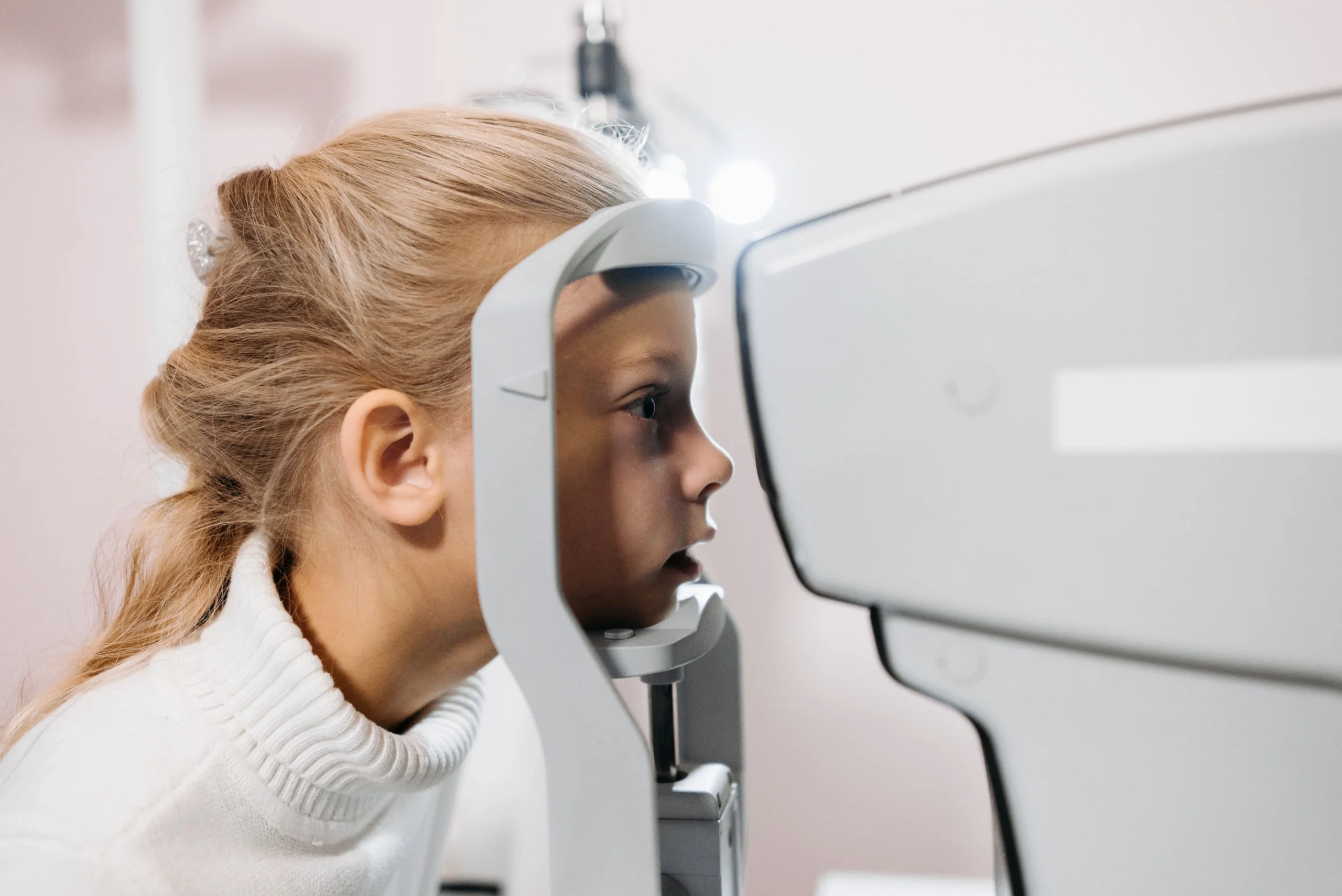
Astigmatism is diagnosed during a comprehensive eye examination. An eye doctor may evaluate:
- Visual acuity
- Corneal shape
- Refraction
- Eye focusing ability
- Eye alignment
- Binocular vision coordination
Because some children compensate well for blurry vision, routine pediatric eye exams are important even when symptoms appear mild. Boston Children’s Hospital recommends regular eye examinations beginning around 6 months of age.
Some children with persistent headaches, dizziness, eye strain, or reading fatigue despite glasses may also benefit from specialized binocular vision testing to evaluate how the eyes work together during sustained visual tasks.
Can Astigmatism in Kids Be Cured? Treatment Options
Astigmatism is typically managed rather than permanently cured.
Eyeglasses
Prescription glasses are the most common treatment for childhood astigmatism and help improve visual clarity.
Contact Lenses
Older children and teens may sometimes use contact lenses depending on age and visual needs.
Monitoring Mild Cases
Some mild cases improve naturally as the eyes develop during childhood.
Vision Therapy or NeuroVisual Rehabilitation
Some children with persistent visual discomfort, dizziness, headaches, or focusing difficulty may benefit from additional binocular vision assessment and individualized neurovisual rehabilitation.
The NeuroVisual Medicine approach uses specialized testing to evaluate how the eyes work together during reading, movement, and sustained visual tasks.
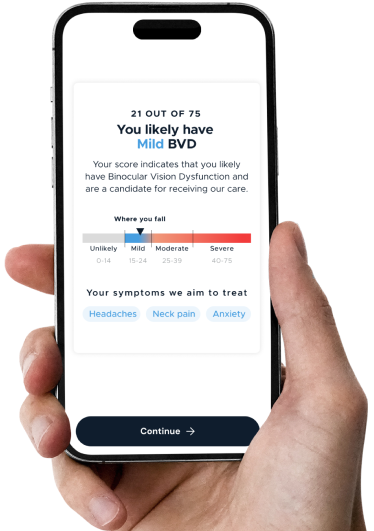
Parents can start with Vision Specialists’ free BVD screening to determine whether binocular vision dysfunction symptoms may be contributing to their child’s visual difficulties.
When Parents Should Consider Additional Binocular Vision Testing
Some children diagnosed with astigmatism continue experiencing symptoms even after receiving glasses. Parents may notice:
- Ongoing headaches
- Difficulty concentrating
- Reading fatigue
- Eye strain
- Motion sensitivity
- Dizziness
- Anxiety in visually busy environments
- Frustration with schoolwork despite updated prescriptions
In some cases, subtle vertical or horizontal eye misalignment may also contribute to symptoms. Because standard eye exams primarily evaluate visual clarity, they may not fully assess how the eyes function together as a coordinated team.
Frequently Asked Questions About Astigmatism in Kids
1. Is astigmatism common in kids?
Yes. Astigmatism is very common in infants and children and often occurs alongside nearsightedness or farsightedness.
2. What are the first signs of astigmatism in kids?
Common early signs include:
- Squinting
- Head tilting
- Eye rubbing
- Headaches
- Difficulty reading
- Trouble seeing clearly at school
3. Can kids outgrow astigmatism?
Some mild cases improve naturally during childhood development, while others continue into adolescence or adulthood.
4. Can astigmatism in kids be cured?
Astigmatism is usually managed with glasses or contact lenses rather than permanently cured. Some mild cases improve as children grow.
5. Can astigmatism cause headaches in children?
Yes. Astigmatism may contribute to eyestrain and headaches, especially during reading or prolonged visual tasks.
6. Can astigmatism affect learning?
Yes. Blurry vision and visual fatigue may interfere with reading, concentration, and classroom performance.
7. What age should children have eye exams?
Many pediatric eye specialists recommend routine eye evaluations beginning during infancy and continuing throughout childhood.
8. Should my child have a BVD assessment?
Children with persistent headaches, dizziness, reading difficulty, motion sensitivity, or eye strain despite glasses may benefit from additional binocular vision evaluation.