
At NeuroVisual Medicine, we specialize in treating binocular vision dysfunction or BVD. One way we treat patients experiencing strain or any other common BVD symptom is to prescribe prism lenses that fit their vision.
Prism Glasses for BVD

Prism glasses correct eye misalignment by bending light to align images properly. These glasses immediately reduce eye muscle strain, allowing the brain to merge images into a single, clear picture with ease.
They are an important part of BVD treatment because they relieve symptoms like double vision, headaches, dizziness, nausea, and difficulties with reading and balance, all of which greatly impact daily life.
Below, we detail everything you need to know about our prism glasses and how they help alleviate patients’ BVD symptoms.
What are Prism Eyeglasses?
Curious if you have Binocular Vision Dysfunction? Take the assessment to get your score and get relief.
Prism glasses are specialized lenses prescribed by NeuroVisual Medicine specialists. These lenses bend light like any other refractive lens, but do so in a way that allows images to be seen by your eyes in the correct position. When the images are realigned, your brain can form a clear picture more easily.
This helps significantly reduce frustrating symptoms such as eye strain, headaches, and dizziness, and also provides double-vision relief, another serious symptom associated with BVD.
What is Binocular Vision Dysfunction (BVD)?
Often, individuals with binocular vision problems experience headaches, dizziness, and nausea while wearing their glasses. These symptoms make everyday activities like driving, studying, and household tasks much harder.
These are just a few of the common issues you may suffer from if you have Binocular Vision Dysfunction (BVD), a disorder where the eyes and brain are not working together correctly, resulting in visual disorientation.
How BVD Works
A person’s brain can normally transform the images seen by each of their eyes into one, singular image when the eyes are aligned. This is known as your Binocular Vision.
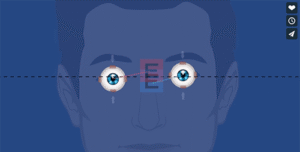
When patients have BVD, it means they have a slight eye misalignment (as seen in the image above). This causes your brain to struggle to form two misaligned images in each eye into a single, unified image.
Common BVD Symptoms
BVD results in a range of visual and physical symptoms that can significantly impact your daily functions. The symptoms most patients commonly report include:
- Headaches or migraines that occur after reading, driving, or using a digital device.
- Increased eye strain, vertigo or dizziness, and fatigue, often with your eyes feeling tired, sore, or like they’ve been working overtime to keep things aligned.
- Blurred or double vision (diplopia); sometimes you don’t see them clearly, but the double images may be fuzzy or unstable.
- Strong light sensitivity.
- Dizziness, nausea, or motion sickness, especially when you are in visually complex environments.
- Difficulty reading or keeping place in text (leading to many with BVD being misdiagnosed with learning difficulties).
- Physical issues like maintaining your balance, neck or shoulder tension, and discomfort within visually demanding tasks.
- Poor depth perception, which you may experience within tasks like driving, changing focus, walking up stairs, and so on.
What to Do About Your BVD & Eye Misalignment
Because BVD has so many different symptoms, many patients are misdiagnosed with a different condition. Luckily, NeuroVisual Medicine specialists are trained to test and identify patients presenting with BVD symptoms. Our goal is to ensure you experience immediate symptom relief from BVD, allowing you to enjoy clear vision without strain or discomfort.
Among our best treatments for binocular vision correction is specialized glasses with TheraLens® microprism lenses. These glasses address BVD’s immediate and long-term symptoms, giving you the visual and physical relief you need and deserve.
In fact, the average patient seen by a NeuroVisual specialist will notice a 50% reduction of symptoms by the end of their first evaluation. Experience significant improvement in your vision and daily activities with help from NeuroVisual Medicine. Start with our BVD assessment today.
Curious if Binocular Vision Dysfunction could be affecting you?
Find a BVD specialist near you and get started on relief.
Learn moreGet Your First Prism Prescription Glasses from NeuroVisual Medicine

At NeuroVisual Medicine, our founding mission is to help the numerous patients suffering from undiagnosed BVD find relief.
In addition to spreading awareness of its symptoms, we have also worked to ensure our network of 75+ specialists across the US, Canada, and Australia can provide life changing relief through our TheraLens® microprism lenses.
Once you start wearing prism glasses, you’ll soon notice less strain and better focus in your eyesight. So, how do you get your custom-made prism glasses? Our treatment process starts with a quick and easy BVD assessment. Interested to learn more? Explore our patient testimonials or find out about your condition by taking our Binocular Vision Dysfunction questionnaire below.
Find out if you have Binocular Vision Dysfunction.
Take our assessment and we'll help you find relief.
Learn moreFAQs About Prism Glasses for BVD
Some of the most common symptoms associated with BVD include headache and dizzy symptoms. Many patients with BVD describe experiencing headaches in the front of the face or around the temples, leading to dizziness that often feels disorienting or causes light-headedness.
Additionally, there are a few more symptoms that can occur on top of the headaches and dizziness, including neck pain, difficulties with balance and coordination, reading and vision problems, and psychological symptoms.
If you consistently experience the more specific symptoms below, you may need a pair of prism glasses from NeuroVisual Medicine:
- Pain Symptoms: Such as facial ache, eye pain, or pain with eye movement (symptoms similar to those of sinus problems, migraines, or TMJ problems); neck ache and upper back pain due to a head tilt (similar to symptoms of spinal misalignment). Because these symptoms can mimic other conditions, they require a specialist to diagnose.
- Balance and Coordination Symptoms: Motion sickness, nausea, poor depth perception, unsteadiness while walking or drifting to one side while walking (“I’ve always been clumsy”), and lack of coordination, with symptoms being similar to those seen in patients with MS, patients who have experienced a stroke, an inner ear disorder, or Meniere’s Disease.
- Reading Symptoms: Difficulty with concentration (symptoms are similar to those experienced with ADHD), difficulty with reading and comprehension, skipping lines while reading, losing one’s place while reading, words running together while reading (symptoms similar to those seen with a learning disability). Prism reading glasses can reduce or eliminate these symptoms almost instantaneously.
- Vision Symptoms: Blurred vision, double or overlapping vision, shadowed vision (symptoms similar to those seen in patients with MS), light sensitivity, difficulty with glare or reflection. For individuals experiencing double vision, glasses with a prism can help alleviate or even eliminate symptoms.
- Psychological Symptoms: Feeling overwhelmed or anxious when in large contained spaces like malls or big box stores like Walmart, when in crowds, or while driving (symptoms similar to those seen in patients with anxiety or agoraphobia).
If you have seen your primary care doctor or specialist and there still has been no cause found for your symptoms, it could be BVD. An eye doctor specializing in BVD can prescribe prism glasses that help eliminate or significantly reduce the above-mentioned symptoms.
When your eyes aren’t aligned with each other, they send the two mismatched images to the brain.
This causes your brain to have trouble forming a single, consistent image — much like trying to line up two pictures, each with a slightly different angle or height.
Your eye muscles then strain to push these images together, trying to create a better image for your brain. This leads to visual fatigue, headaches, and other symptoms that are constantly aggravating.
Prism glasses help by having lenses that bend light before it enters your eye. Each lens is custom-made to redirect light so that it aligns properly with each of your eyes, giving your brain two images that are now aligned perfectly.
The prism of a lens in these glasses is measured by prism diopters (PD). NeuroVisual Medicine specializes in setting microprisms for each of your lenses, so that even the slightest difference in alignment between your eyes is taken into account.
This slight difference, while wearing our prism glasses, helps your eyes create a more consistent image in your brain. As a result, you’ll enjoy better vision and relief from your BVD symptoms.
Prism eyewear appears identical to regular reading glasses or any other type of glasses; it’s the lenses that make the difference. The thickness of glasses with prisms is not visibly different from that of a regular pair of eyeglasses for most patients.
Many of our patients report noticing relief on the same day they wear their microprism glasses. At the very least, we expect you to start feeling significant changes within the first week.
There may be some discomfort as your visual system adjusts to the change in prescription, but our NeuroVisual trained clinicians guide your care every step of the treatment plan to maximize your long-term symptom relief.
Yes, your prism glasses can be worn at all times. In fact, prescription glasses with prism correction should be worn consistently throughout each day in order to prevent the uncomfortable headaches, dizziness, and other symptoms of BVD from coming back and interfering with your life.
No, properly prescribed prism glasses do not cause any side effects. The goal of prescription prism glasses is to help correct your binocular vision conditions, thereby improving your overall well-being.
However, not all optometrists are trained to prescribe microprisms properly, and a prism prescription that is improperly prescribed or made can make your BVD symptoms worse.
To ensure you receive maximum relief from your BVD symptoms, make sure you see a NeuroVisual Medicine specialist (an optometrist who has taken additional training in treating BVD, and in prescribing and making microprism lenses).
When you receive a set of properly prescribed prism glasses, you’ll enjoy fewer symptoms, not more.
Some insurance plans can partially cover our NeuroVisual Evaluation. However, most insurance providers do not cover our microprism lenses. Some do provide reimbursement through discount vision plans (examples include VSP and EyeMed). Connect with a NeuroVisual Medicine provider to discuss all available options with you.
